There are cases where a song that did not receive much attention at the time of its release becomes popular years later due to some unexpected event. This is what is called a reverse trend. Only after time has passed do people begin to recognize the true value of the song. The same applies to watches. There are watches that did not attract much attention when sold as current models but gained the interest of collectors or increased in value in the pre-owned market after being discontinued. Why do some watches that were not appreciated at the time see their value rise later?
Tudor North Flag
First Generation
The name North Flag is a combination of ‘North’ from the British North Greenland Expedition held from 1952 to 1954 and ‘Flag’ symbolizing the act of planting a flag as a sign of first arrival or pioneering. It was first introduced in 2015 as a watch embodying the spirit of adventure and exploration. In the past, Tudor utilized Rolex’s waterproof technology and design expertise while securing price competitiveness by using movements from external suppliers. Simply put, It was a brand launched to offer Rolex’s technical foundation and reliability at a more reasonable price.
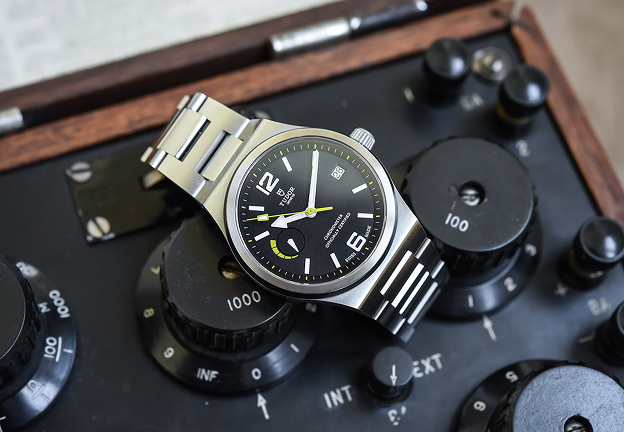
Tudor North Flag First Generation,
Steel·Caliber MT5621 (2015)
Source: https://monochrome-watches.com
The North Flag broke away from Tudor’s traditional spirit and set a new standard. It was equipped with the self-winding caliber MT5621 and, For the first time in Tudor’s history, Featured a see-through case back, ushering in the era of in-house movements. In terms of details and functions, It included a black ceramic ring on the bezel and, For the first time for the brand, A power reserve indicator. The dial was accented with yellow color. While many Tudor watches are based on heritage, The North Flag experimented with modern forms and new designs and functions.
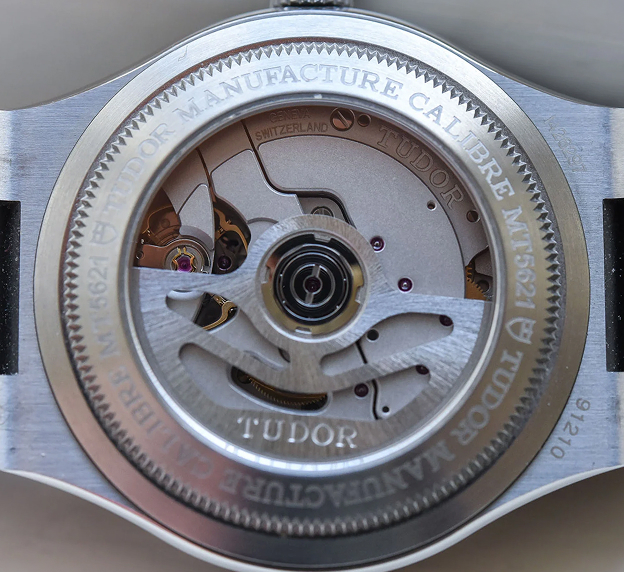
Tudor North Flag First Generation,
Caliber MT5621 visible through the see-through back (2015)
Source: https://monochrome-watches.com
Second Generation
In 2026, The North Flag returned as a second generation model, About five years after the first generation was discontinued. Several aspects have changed compared to the previous version. It now features a GMT function instead of a power reserve indicator, Enhancing its functionality as an explorer’s watch. The dial is now symmetrical, Unlike the asymmetrical design of the first generation. It is equipped with the self-winding caliber MT5652-U and has received METAS Master Chronometer and COSC certifications, Further enhancing its credibility for accuracy and reliability.
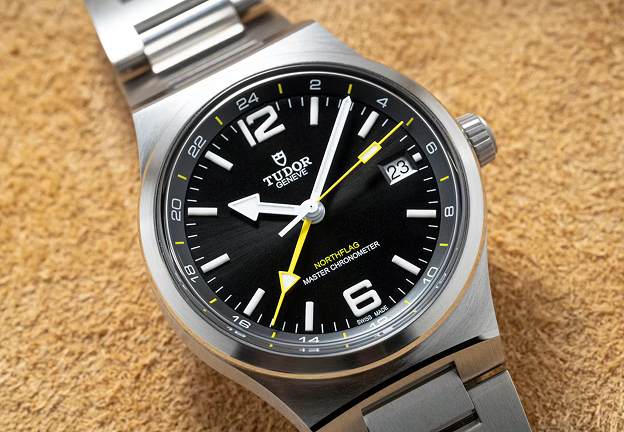
Tudor North Flag Second Generation,
Steel·Caliber MT5652-U (2026)
Source: https://www.hodinkee.com
The first generation North Flag was not a major commercial success, But with the arrival of the second generation, it is receiving renewed attention. Its experimental features and design, As well as its symbolic role in ushering in the Tudor in-house movement era, Are being re-examined. Previously undervalued, The first generation may become a blue chip in the market thanks to the positive impact of the new model.
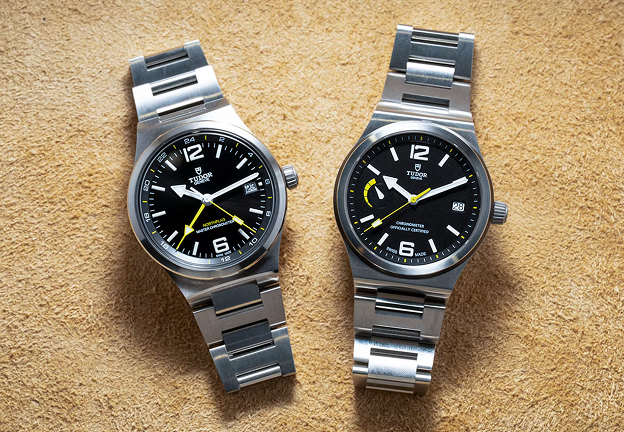
Tudor North Flag: Second Generation and First Generation (from left)
Source: https://www.hodinkee.com
IWC Ingenieur
Ingenieur SL Ref. 1832
The Ingenieur, Recognized as one of Gerald Genta’s trilogy along with Audemars Piguet’s Royal Oak and Patek Philippe’s Nautilus, Refers to the Ingenieur SL Ref. 1832 first released in 1976. When we think of the Ingenieur, We usually imagine the integrated bracelet design. However, The Ingenieur actually began in 1955 with Ref. 666, Which was closer to a dress watch with anti-magnetic performance. Therefore, It is important to distinguish between them. The Ingenieur SL Ref. 1832 was created as part of IWC’s modernization project, Requiring a new design to accommodate anti-magnetic performance and IWC’s movement requirements. Gerald Genta overcame these constraints to complete the design of the Ingenieur SL. However, This watch was not commercially successful. Targeting a specific profession such as engineers and its bold design did not gain much traction, And only 598 pieces were produced before it was discontinued in 1983.
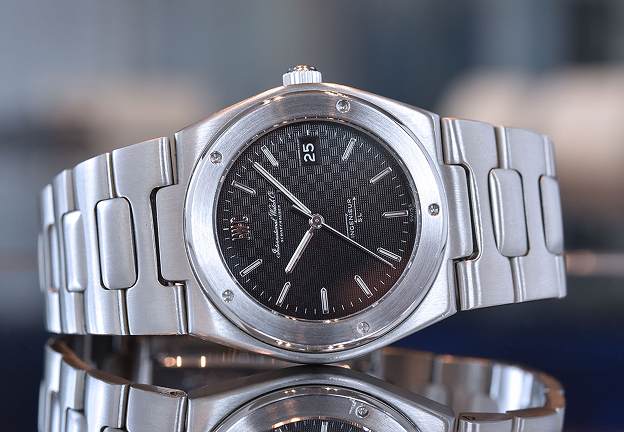
IWC Ingenieur SL Ref. 1832,
Steel·Caliber 8541ES (1976)
Source: https://monochrome-watches.com
Ingenieur Automatic 40 50th Anniversary
2026 marks the 50th anniversary of the Ingenieur SL Ref. 1832. To commemorate this, A 50th anniversary model has been released. Based on the current Ingenieur model, The 40mm version maintains anti-magnetic performance with a soft iron cover and solid back (the 35mm model has a see-through back). The main difference from the regular edition is the dial; the 50th anniversary model features a brushed silver-plated dial. This is the biggest difference from the regular edition, Which uses a grid pattern, And the Ingenieur lightning logo includes a ‘50’ to mark the anniversary. Since the launch of the current Ingenieur collection in 2023, The original Ingenieur SL has been re-evaluated. Its rarity of fewer than 600 pieces and the rapid price increase of other Gerald Genta works have led to the Ingenieur SL being reappraised as a signature piece. The original is now achieving higher auction prices, And synergy is expected between the original, The current model, And the 50th anniversary edition.
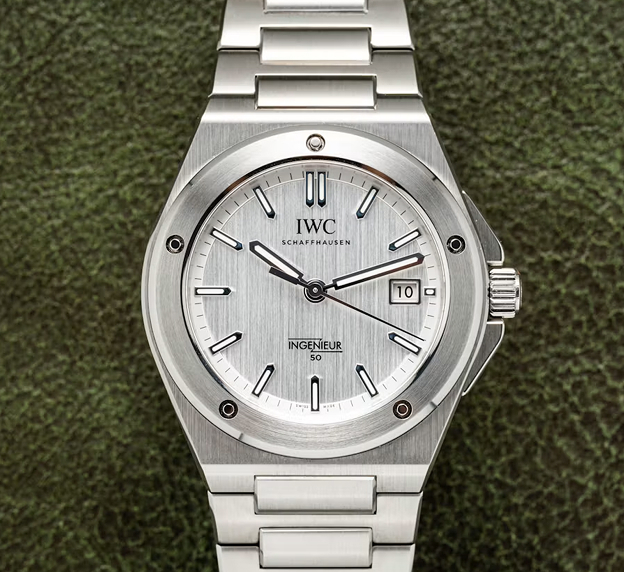
IWC Ingenieur Automatic 40 50th Anniversary Edition,
Steel·Caliber 32111 (2026)
Source: https://www.hodinkee.com
Ingenieur Ref. 3227 and Ref. 3239
In 2005, Ref. 3227, A modern reinterpretation of the Ingenieur SL, Was released with a large 42mm diameter and 14.5mm thickness, Featuring an in-house movement. However, It was not commercially successful and was discontinued after only four years. After a hiatus, It returned in 2013 as Ref. 3239, with a design closer to the original. The diameter was reduced to 40mm and the thickness to about 10mm, Positioning it as an all-round sports watch. It was produced for about four years, But the market response was somewhat ambiguous. Currently, models that are closer in design and detail to the Ingenieur SL are more highly valued in the market.
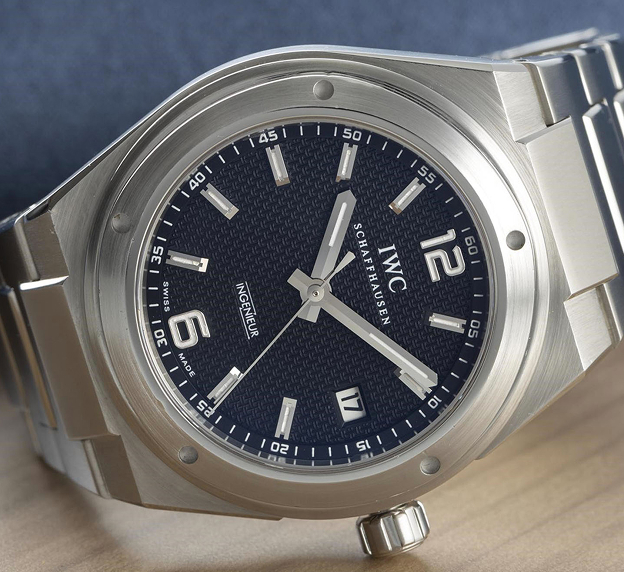
IWC Ingenieur Automatic Ref. 3227,
Steel·Caliber 80110 (2005)
Source: https://monochrome-watches.com
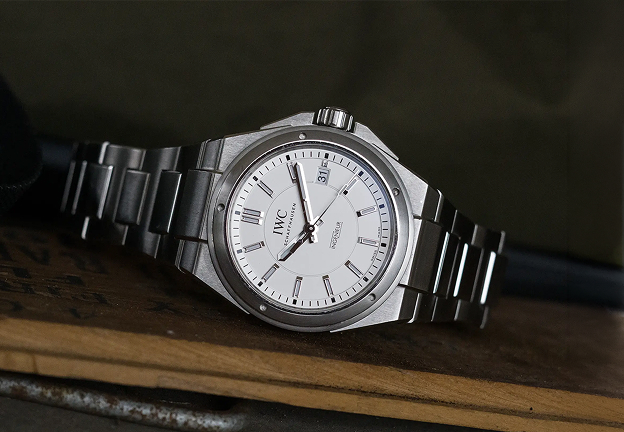
IWC Ingenieur Automatic Ref. 3239,
Steel·Caliber 30110 (2013)
Source: https://thedeeptrack.com
Cartier Roadster
Ref. 2510
Launched in 2002, The Roadster is a sports watch inspired by automobiles. It features a streamlined barrel case, A concentric dial reminiscent of a car dashboard, And a conical crown. The magnifying lens for the date window is seamlessly connected to the side of the case like a car headlight, Creating a unique detail. Unlike other Cartier collections, It was developed mainly for men, But market reactions varied by region. It performed well in the North American market, But responses elsewhere were lukewarm. As a result, It was discontinued after about ten years of production.
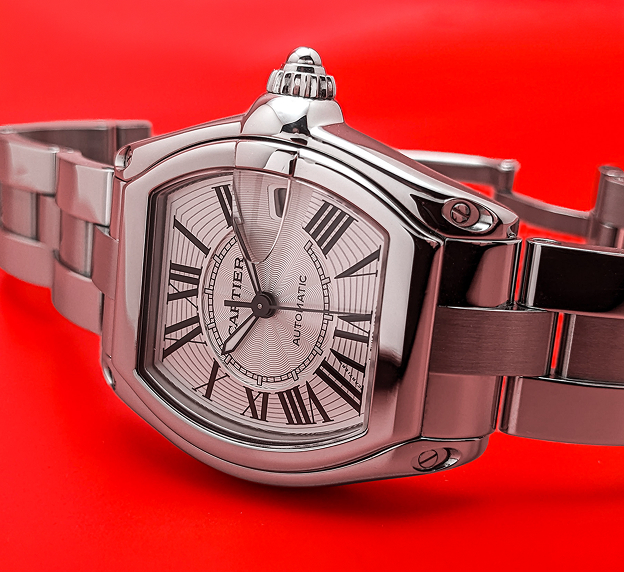
Cartier Roadster Large Model Ref. 2510,
Steel·Caliber 3110 (circa 2008)
Source: https://www.ablogtowatch.com
Ref. WSRD0020
In 2026, The Roadster returned after 14 years. It retains the key design elements of the barrel case, Concentric dial reminiscent of a car dashboard, Conical crown, And magnifying lens for the date, While refining the overall proportions and lines. The previous model had rougher and less refined details such as fake screws on the lugs, But the new model has been completed in a much sleeker form by refining the case lines and details.
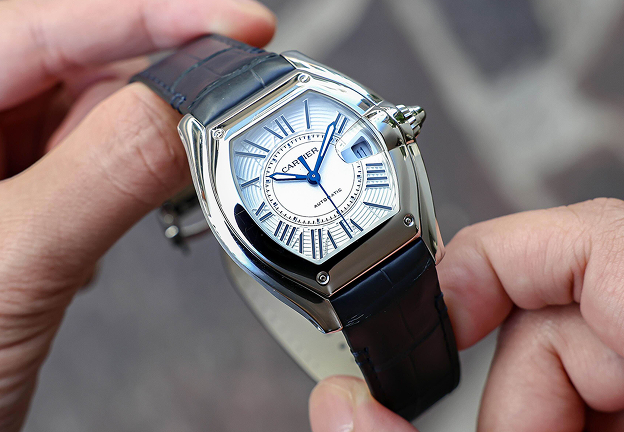
Cartier Roadster Large Model Ref. WSRD0020,
Steel·Caliber 1847 MC (2026)
Source: https://www.watchadvice.com.au
The launch of the new Roadster is an opportunity to re-evaluate the previous model, Which was popular in North America but did not become a global flagship collection. Recently, Cartier has been reintroducing discontinued models such as the Pasha and Tank Must, Continuing to draw attention. The Roadster also aims to re-evaluate the previous model through the new release. Compared to the new Roadster, The raw appeal of the previous model is being highlighted. It will be interesting to see if Cartier’s strategy of reviving discontinued models will also succeed with the Roadster.
Felix
Writer
Watch Columnist