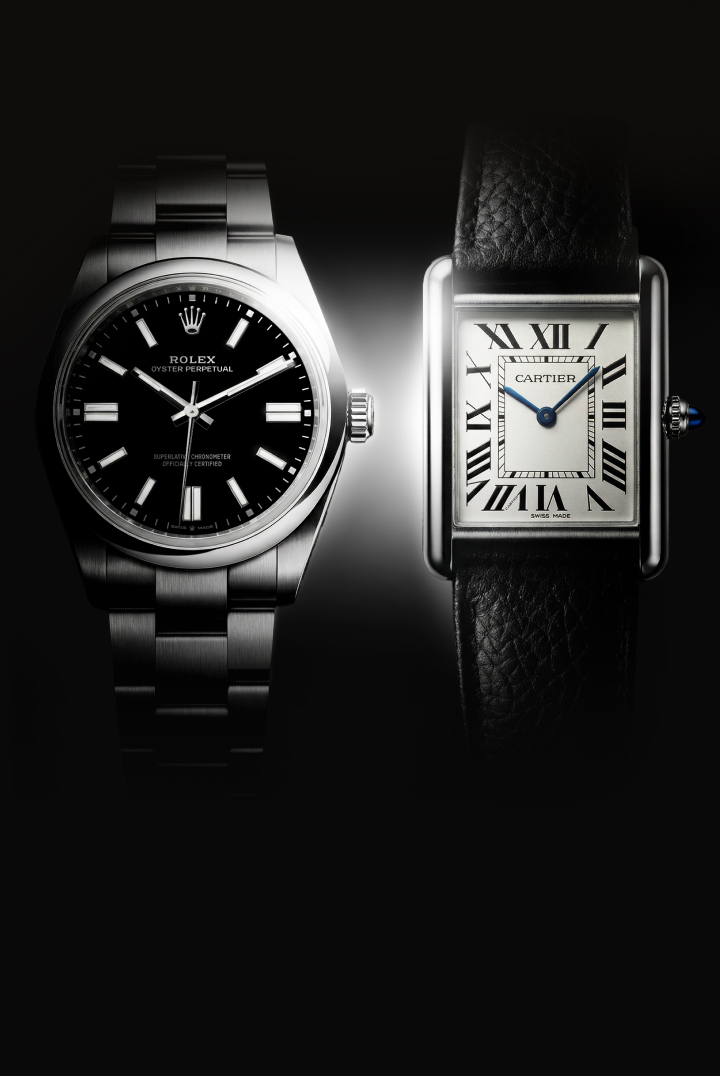
Before the advent of quartz watches, The virtue of mechanical watches was accuracy. A precise watch meant excellent quality. Observatories, Which needed to measure time without error, Regularly held chronometer competitions, And for watchmakers in an era without much marketing, This was an opportunity to have the quality of their watches officially recognized. However, When Japanese watches began to dominate the competitions in the late 1960s, Switzerland decided to abolish the observatory competitions altogether. Instead, In 1973, The Swiss Official Chronometer Testing Institute (COSC) was established in La Chaux-de-Fonds.
For over half a century, The term "chronometer" has been synonymous with watches certified by this institution, Boasting strong credibility. However, As the performance of mechanical watches advanced rapidly, Some brands dissatisfied with COSC certification began to set their own standards. Notable examples include Patek Philippe and Rolex, As well as Omega and Tudor, Which introduced the "Master Chronometer" certification in partnership with the Swiss Federal Institute of Metrology (METAS). Let us also look at other types of watch certifications. These are guarantee marks that promise the quality of mechanical watches.
Swiss Official Chronometer Certification
COSC
Only the movement, Not the finished watch, Is tested. Additionally, At least 50% of the watch components must be produced in Switzerland, And at least 60% of the total production cost must be incurred in Switzerland, Which is a prerequisite for the "Swiss Made" label.

© COSC
Movements submitted for testing are evaluated over 15 days in five positions and at three temperatures of 8°, 23°, And 38°, To determine how accurately they operate. The average daily deviation must remain between -4 and +6 seconds. More than two million movements receive COSC certification each year, Which is said to account for about 15% of all watches exported from Switzerland.
Geneva Seal
Poinçon de Genève
This seal was created in 1886 to protect and promote the excellence of watches made in the Geneva region, A center of high-end Swiss watchmaking. It is the oldest such certification.

© Vacheron-constantin
The certification criteria consist of 12 items that assess the quality of high-end movements. While it appears to focus mainly on movement finishing, Such as black polishing and anglage (beveling), The ultimate goal is to evaluate the movement's superior structure and aesthetics. Since 2012, It has evolved into a comprehensive certification system that covers water resistance, Accuracy, Functionality, And power reserve for the entire watch.

© Blancpain
Brands that have received the Geneva Seal include Vacheron Constantin (since 1901), Chopard, Roger Dubuis, And Cartier. Recently, Louis Vuitton has also begun to receive the Geneva Seal for its new Tambour watch.
Qualité Fleurier FQF
(Fondation Qualité Fleurier)
This certification is issued by the Fleurier Quality Foundation, Established in 2001 by Parmigiani and its movement manufacturer Vaucher, Together with Chopard and Bovet.

© Quillandpad
In addition to 100% Swiss manufacturing and movement finishing, The certification strictly inspects the entire watch through COSC, Chronofiable (which tests actual wear), And the proprietary Fleuritest, Which simulates real-world use. In terms of specifications, Only the finest Swiss watches can qualify, But in reality, The certification is mostly limited to the founding brands Parmigiani, Chopard, And Bovet.
Chronometric
+ Chronometric
+ Observatory
This is a new certification standard announced in 2014 by Timelab, The organization that issues and manages the Geneva Seal. It covers not only chronometer testing but also water resistance, Anti-magnetism, And power reserve.

© Observatoirechronometrique
It applies to all watches made in Switzerland, And the chronometer testing standard also goes a step further by following ISO/CEI 3159, The same as COSC, But is conducted with the movement assembled in the case. For this reason, Some expect it to serve as a catalyst for the evolution of COSC.
Master Chronometer
METAS Master Chronometer
After the COSC-certified movement is assembled into the case, It undergoes eight tests over ten days. These include water resistance, Temperature changes, And checking how much deviation occurs depending on the state of the power reserve.

© Qullandpad
Most notably, It emphasizes anti-magnetism, A key issue in modern environments, By exposing the watch to a magnetic field of 15, 000 gauss. This requires the ability to handle silicon components. The testing is also stricter than COSC, Requiring six positions and an average daily deviation of 0 to +5 seconds. Furthermore, All tests are conducted internally by the brand, With staff from the Swiss Federal Institute of Metrology (METAS) present on site.

© Monochrome
Although it is much stricter than COSC certification, Omega began receiving Master Chronometer certification for its Co-Axial watches in 2014. Tudor also obtained Master Chronometer certification for the Black Bay Ceramic for the first time this year. Considering the testing conditions, This is quite an achievement.
Patek Philippe Seal
the Patek philippe Seal
In 2009, Patek Philippe announced its own new certification. The watch industry was shocked, As the brand parted ways with the Geneva Seal after more than 120 years.

© Patek philippe
Patek Philippe's new standard far exceeds the requirements of the Geneva Seal. It covers not only the movement but also the case, Dial, Hands, Pushers, Strap spring bars, And both the aesthetic and functional aspects of the finished watch. The accuracy standard is also stricter than COSC. For movements with a diameter of 20mm or more, The daily deviation must be within -3 to +2 seconds, And for those under 20mm, Within -5 to +4 seconds. In addition, The Patek Philippe Seal includes a clause promising lifetime service, The first in the watch industry. The brand guarantees after-sales service and restoration for every watch it has made since its founding in 1839.
Rolex Green Seal
ROLEX
Superlative Chronometer
Rolex has implemented its own chronometer standards since its early days.

© Watch-insider
Since 1951, When precision certification was formalized in Switzerland, Rolex used the red seal engraved with "Officially Certified Chronometer." In 1957, With the introduction of the Caliber 1500 (which boasted even greater precision), The concept of the Superlative Chronometer was introduced. Since the implementation of the Swiss Official Chronometer Certification (COSC) in 1973, Rolex has conducted COSC certification and raised the difficulty of its own tests. In 2015, Rolex's Superlative Chronometer certification was further strengthened with even stricter standards.

© Rolex
All Rolex movements naturally undergo COSC certification, And after being assembled into the case, They are checked for accuracy, Power reserve, Water resistance, And self-winding performance. In particular, Rolex's proprietary accuracy test is unique in that it simulates real-life wearing conditions through seven position tests (two more than COSC) and dynamic movement tests, With a daily deviation allowance of only -2 to +2 seconds. The green seal engraved with "Superlative Certified" proves this.
Tampa
Writer
Watch Columnist