There are various materials used for watch cases. However, The metals that account for a high proportion as case materials are easy to identify. Precious metals such as platinum or gold, Which stimulate human desire with their brilliant luster, Are essential for making the finest watches. Titanium, Which is strong yet light and does not irritate the skin, Is also important. Stainless steel, Which has high corrosion resistance, Almost no surface change, And can achieve a good shine, Is also indispensable when making watch cases.
Son of Zeus

Tantalus Gioacchino Assereto circa 1640s
In 1802, A Swedish chemist named Anders Gustaf Ekeberg discovered a certain metal. Its chemical symbol is Ta and its atomic number is 73. This metal was named after Tantalos from Greek mythology because of its exceptional resistance to corrosion, As it hardly dissolves in acid.
Tantalos was the son of Zeus. He was punished with eternal hunger and thirst for stealing the food of the gods and revealing their secrets to humans. Although water and fruit were right in front of him, He could never reach them. Ekeberg saw that the metal he discovered did not react at all even when immersed in strong acid and thought, "No matter how much acid attacks, It cannot dissolve, Just like Tantalos who is never satisfied." That is why this metal was named 'Tantalum'.
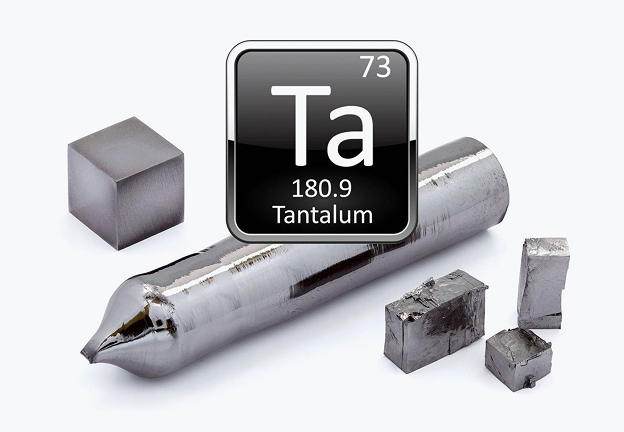
© https://briandcolwell.com/a-history-of-tantalum
This metal, Which even has a strong name, Occasionally appears as a material for watch cases. It does not have the universally good properties of stainless steel and actually has more disadvantages as a watch case material. Nevertheless, Let us take a look at watches made of tantalum, Which are recognized for their rare value.
Heavy
Tantalum is about twice as heavy as stainless steel and about 3.75 times heavier than titanium, Which is considered a lightweight material. It is about 6% heavier than gold, So for the volume of a watch case, There is little difference from gold. Platinum, Which is recognized as the top material for watches, Is even heavier than tantalum by more than 20%.
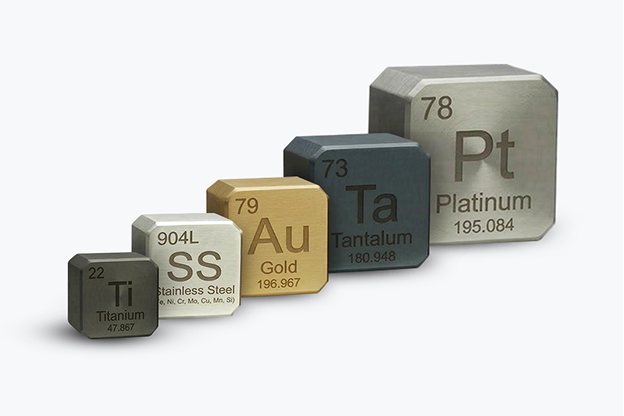
Case Material Weight Ranking © VIVER
Preferences may vary, But since a watch is worn on the wrist, The lighter it is, The more comfortable it feels. Tantalum makes the watch heavy because it is similar in weight to gold. However, Unlike gold or platinum, It is not a precious metal and is relatively inexpensive (about 1/360 the price of gold for the same weight). This raises the question of whether one should bear the weight to wear a tantalum watch.
Dark Blue-Gray
A two-tone case of stainless steel and gold is a representative example of matching metals of different colors to achieve a contrasting effect. The material of the watch case not only serves to protect the movement but also expresses individuality through color and texture. The dark blue-gray of tantalum is even more distinctive than the color of titanium, Which is already considered unique. It has the raw metallic texture of unprocessed metal and, While it may look like titanium at first glance, It reveals a deeper and colder tone. When polished, It gives off a cold metallic luster and conveys a chic sensibility rarely seen in other metals.
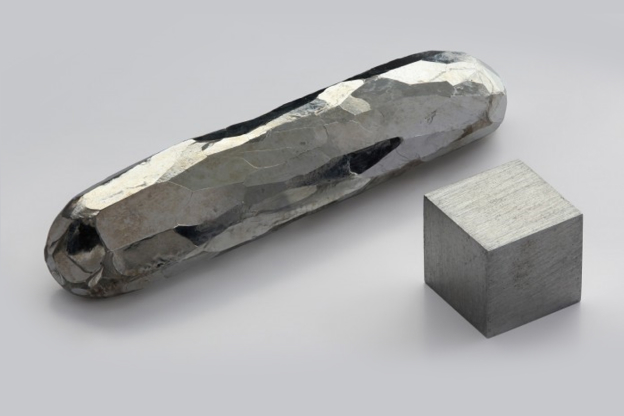
© https://im-mining.com
Hard
Tantalum has a Mohs hardness of 6.5, Which is higher than stainless steel and titanium. In terms of Vickers hardness, It is slightly lower than titanium, So titanium is a bit better in terms of resistance to pressure. However, As its name suggests, Tantalum has strong acid corrosion resistance and a melting point of nearly 3, 000 degrees. This causes excessive heat during processing. The heat is transferred to the tools, Causing rapid wear, And due to its high ductility, The metal stretches like clay, Making it difficult to shave thinly during cutting. It is said that processing tantalum is more than three times harder than processing platinum, Which is already known to be difficult. Therefore, From the perspective of watch manufacturers, It is understandable why it is called the devil’s metal.
Audemars Piguet Royal Oak Tantalum
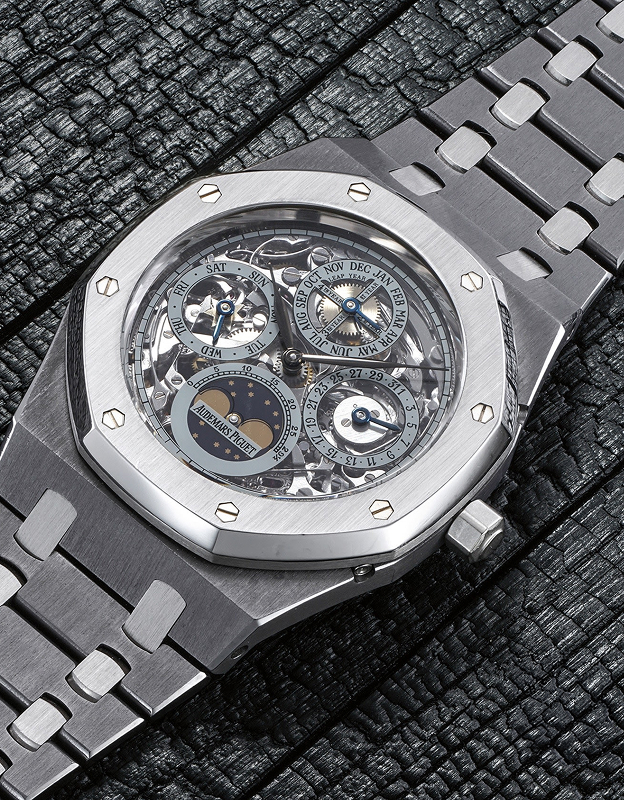
Ref. 25829TP
© https://www.phillips.com
The first tantalum watch is known to be the Audemars Piguet Royal Oak. According to records from auction houses such as Phillips, It began as a special order for King Juan Carlos I of Spain. A matte dark-toned case was needed to prevent the reflection of light from the watch from startling game during hunting. At first, The king’s gunsmith tried the bluing technique used for gun barrels but failed, And in the end, Audemars Piguet provided a solution with the subdued luster unique to tantalum.
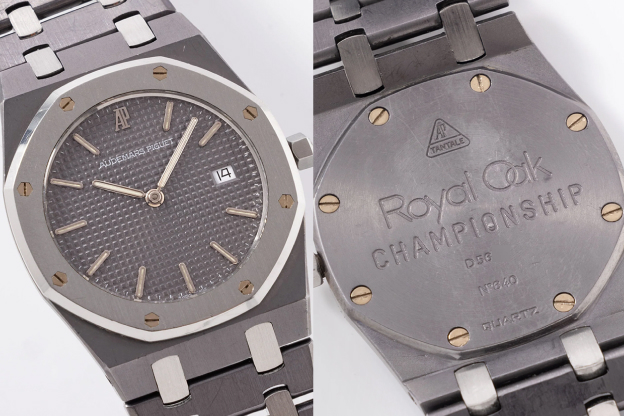
Ref.56175TT
© https://www.bulangandsons.net
Reference numbers for watches using tantalum had TT (tantalum + steel) or TR (tantalum + rose gold) after the numbers. (Rarely, There is also TP for tantalum and platinum combinations.) Nowadays, TT and TR codes are rarely seen because tantalum watches are no longer produced.
Models using tantalum had a unique color and weight. They had a heft comparable to gold cases. Several versions of the Royal Oak were made using tantalum, And among them, The two-tone models with rose gold made the color of tantalum stand out even more. The surface of the dark, Cold blue-gray tantalum was finished with a matte hairline, And a clear contrast was achieved with the gold bezel and bracelet connecting links. Today, Various materials such as ceramic and carbon are used to create dark colors, But tantalum, Which reveals the texture and coldness of metal, Certainly has a different charm. Thanks to this, Vintage tantalum watches are being sold at quite high prices at auctions.
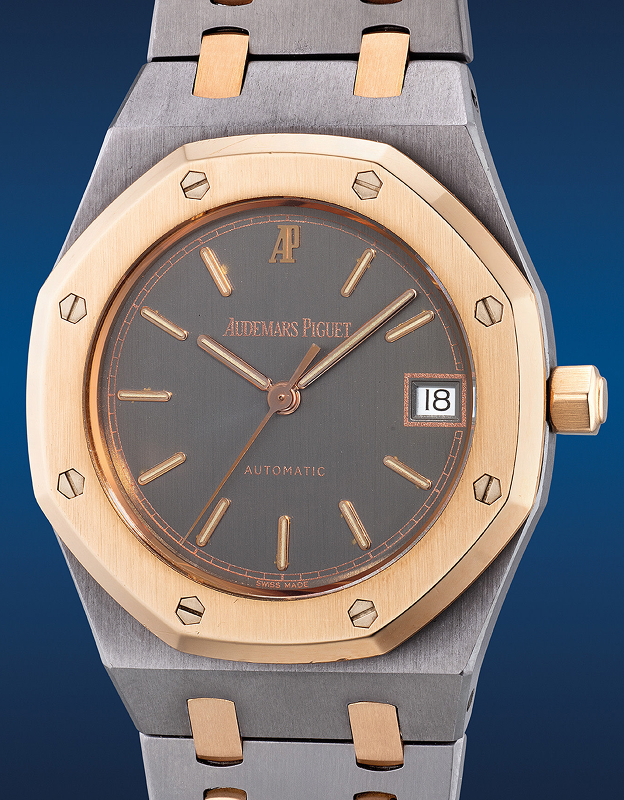
Ref. 14790TR
© https://www.phillips.com
Omega Seamaster Diver 300M Chronograph
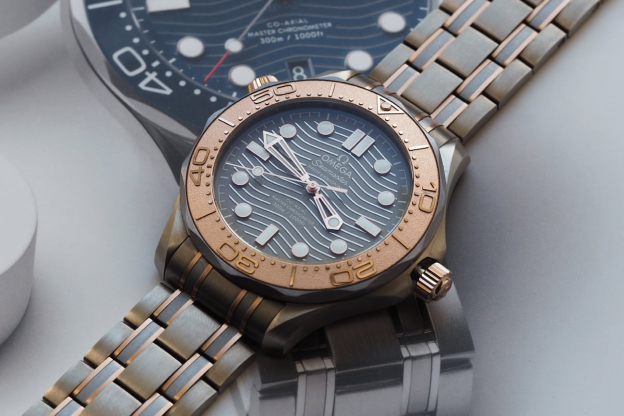
Ref. 2296.80 The Beast
© https://www.fratellowatches.com
Although only a few references exist, Omega is a company that has consistently produced tantalum watches. In 1992, Omega introduced the Seamaster Diver 300M Chronograph (Ref. 2296.80) using tantalum for the first time. Nicknamed ‘The Beast’, It was released with a strong and glamorous appearance made of rose gold, Titanium, And tantalum, And was priced accordingly. Tantalum was used as one of the materials for the bracelet links, So its use was relatively limited, But it is said that the manufacturing difficulty was considerable. After being produced for about two to three years, It was discontinued, Mainly because it was unpopular due to its high price.
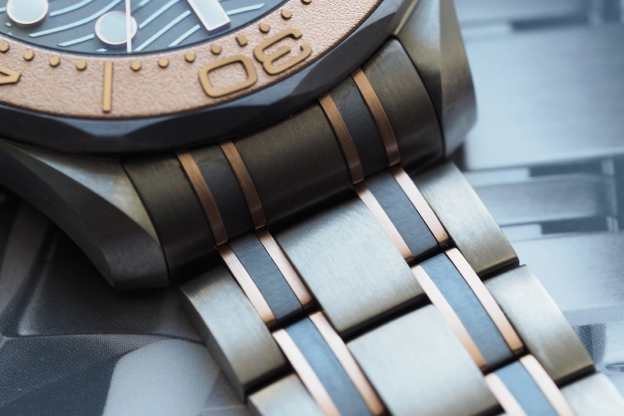
Ref. 2296.80 Tantalum Bracelet Link
© https://www.fratellowatches.com
Later, At Baselworld 2018, Omega revived ‘The Beast’ as a date version to commemorate the 25th anniversary of the Seamaster Diver 300M. Although everything changed with the new generation, The unique composition and distribution of materials remained the same as The Beast. In 2020, A chronograph version that fully inherited The Beast’s lineage was released. It was equipped with the in-house chronograph caliber 9900, And the rose gold was replaced with Omega’s proprietary Sedna gold, Further highlighting the charm of the tri-metal and tantalum.
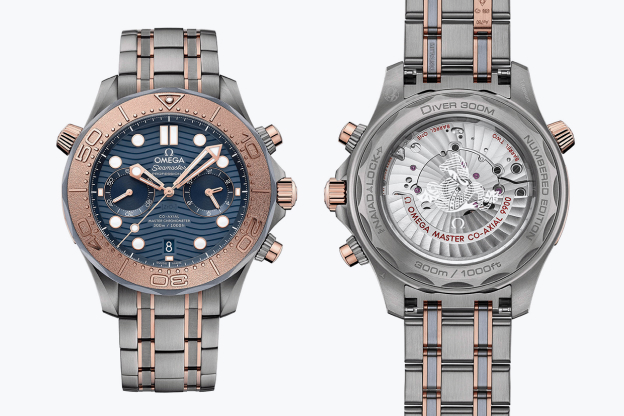
The new Omega Seamaster Diver 300M Chronograph
Titanium, Tantalum and Gold
(Ref. 210.60.44.51.03.001)
© https://monochrome-watches.com
Other Brands
In addition, Tantalum watches have been attempted by several watch companies. Among them, The high-end brand François-Paul Journe (P.Journe) has made many models with tantalum cases. They are usually finished with a polished surface, Allowing you to appreciate a deep and dark luster not seen in the tantalum of Audemars Piguet or Omega. Although it is difficult to process, Once completed, It is a metal with a devilish charm that cannot be found in any other metal. That is tantalum.
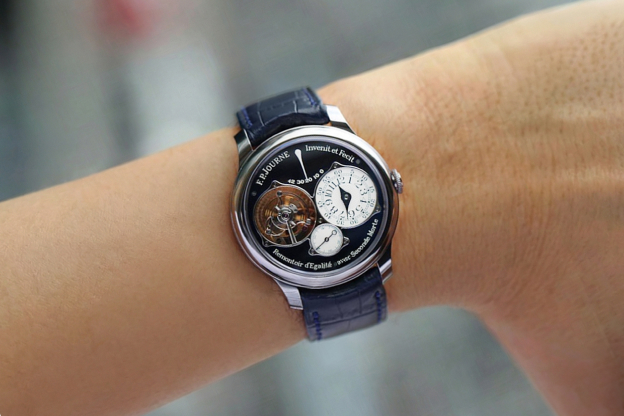
P.Journe Tourbillon Souverain Bleu Caliber 1403
©
https://www.watchonista.com
Felix
Writer
Watch Columnist


