The original price of an item. In other words, When you have to pay more than the retail price and buy an item at a premium, The term 'premium' is often used. Here, 'premium' comes from the English word Premium.
Since when did people start paying a premium for Rolex? After COVID-19, Most Rolex models have continued to carry a premium, But in the past, Not all models always had a premium attached.
During the pandemic, Demand surged and premiums formed on many models, And Rolex resale is still a hot topic. Unlike models whose prices rose in the last two to three years due to increased liquidity in the market, Which models have always had a premium for a long time? We first looked at three models, Using examples from overseas where the resale market is active.
Outstanding price retention!
Daytona Ref. 116520

ⓒ watchuseek
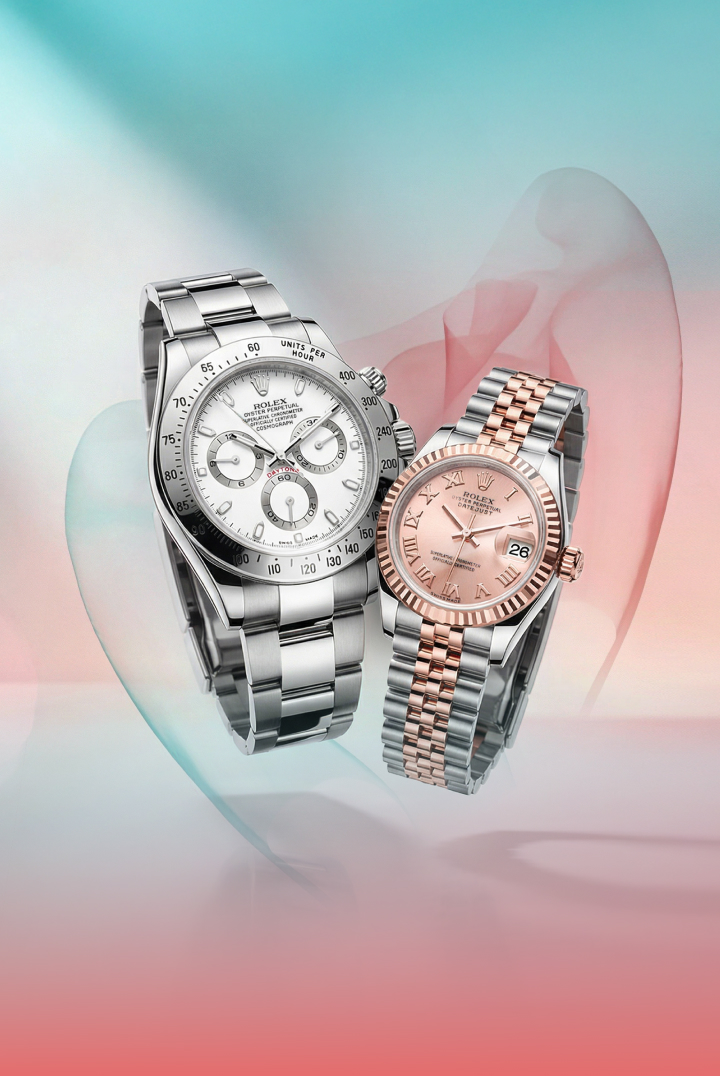
Produced from 2000 to 2016, The Daytona is Rolex's all-weather premium model. Not only overseas but also in Korea, It was only available through reservations. The finely crafted case, Luxurious bracelet, And beautifully balanced dial received worldwide attention as soon as it was released. Just like the open-run craze in Korea, It took a lot of effort to get this model in overseas markets at the time.
Around 2012, When many Japanese tourists visited Korea, It was easy to see Japanese people looking for the Daytona at Rolex stores. This was because the Daytona, Which retailed for about 14 million won, Was already trading for around 17 million won on the secondary market.
Unless there are external factors such as the current global economic crisis, The Daytona has always carried a premium, And even if the price drops, It quickly recovers.

Daytona 116520
40mm, Black, Oyster


Daytona 116520
40mm, White, Oyster
The milestone of Submariner Green,
Submariner Date Ref. 16610LV

ⓒ MTR-watches
This is the model released for the 50th anniversary of the Submariner in 2003. It is also nicknamed Kermit. Featuring the now-popular green bezel and larger indexes, It was produced for about seven years from 2003 to 2010. When this model was released in the early 21st century, When the Submariner Black had been around for 50 years, The response was not that enthusiastic. The green bezel was unfamiliar, So it sold steadily but not explosively. However, When production ended in 2010, Its value gradually increased and its popularity continues to this day. When it was discontinued, The retail price was in the 7 million won range, But now in overseas markets, Unworn new pieces are trading close to 30 million won.

Submariner Date 16610LV
40mm, Black, Oyster

Submariner Date 116610LV
40mm, Green, Oyster

Submariner Date 126610LV
41mm, Black, Oyster
The leader of the GMT-Master,
GMT-Master 2
Ref. 116710BLNR

Released in 2013, The GMT-Master 2 Ref. 116710BLNR is a milestone model as it was the first to feature two colors on a single ceramic bezel. Overseas, Demand quickly rose after its release, And a premium naturally formed. In Korea, However, The premium market had not yet developed, So it was relatively easy to purchase at official stores. The launch price was 10.5 million won, Just 600, 000 won higher than the single-color bezel GMT Black (then 9.9 million won). When this model was released, Rolex enthusiasts were excited, Expecting the return of the Pepsi and Coke models.
In fact, The following year, In 2014, The Pepsi returned. However, Since it was released only in white gold, The price exceeding 40 million won was too much of a burden. (At the time, Gold models were always thought to have a negative premium. And spending 40 million won on a Rolex? That was almost unthinkable. 😂) This model was the first to signal the direction of the GMT-Master line. Currently, It is trading at around 19 million won on the resale market.

GMT-Master 2 116710BLNR
40mm, Black, Oyster

GMT-Master 2 126710BLNR
40mm, Black, Oyster

GMT-Master 2 126710BLNR
40mm, Black, Jubilee
The three models introduced this time are symbolic of Rolex's popularity. They are always on someone's wish list. I can confidently say that you will never regret owning one of these watches.
Samuel
Writer
Can talk about watches for 120 hours straight