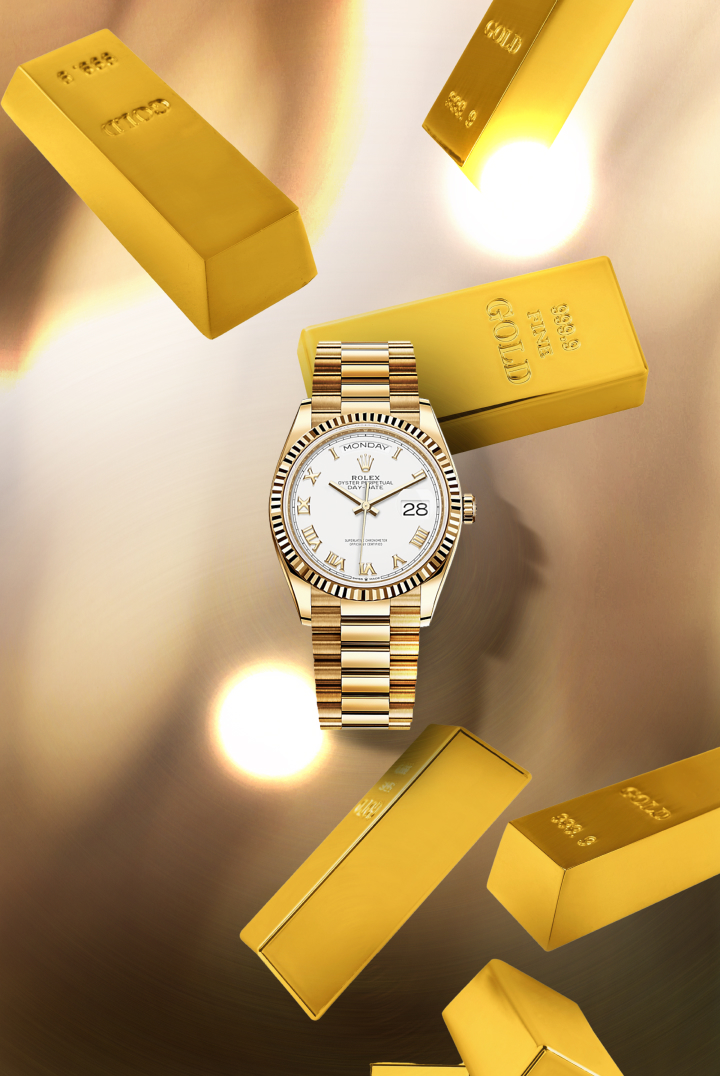
23 TRILLION.
This figure represents the current total value of all gold in the world, estimated to be around $15 trillion to $23 trillion USD. It’s approximately six times larger than Nvidia’s market capitalization and is comparable to the combined GDP of China and Japan, highlighting gold’s massive role in global wealth and value investing.

© ABC
Why Is gold so expensive when it doesn’t pay dividends, earn Interest, drive Innovation, or produce any income?
Before I go in, for full disclosure purposes, I’m a big fan of gold and other metals. I previously worked as a junior analyst in the steel and metals sector at Nomura Securities, where I was a true ‘metal enthusiast,’ deeply interested in studying about companies like Korea Zinc Co., Ltd., the world’s largest single-site zinc smelter and POSCO (Pohang Iron and Steel Company), one of the largest steel companies globally.
Some enthusiasts even say that the main reason they love watches or cars is simply because they’re crafted from metal.

Day-Date 40 228235
40mm, Olive Green/Roman, President


Day-Date 36 128238
36mm, Green Ombre/Roman, President
Today, I’d like to explore why many of us are drawn to gold—not simply because it’s considered a ‘safe asset,’ scarce resource, or symbol of wealth, but for deeper, more instinctive reasons. I’ll also share some fascinating ‘hidden secrets’ about gold that even I was surprised to discover.
The Total Value of Gold Worldwide Equals the Market Cap of Six NVIDIAs Combined.

“[Gold] gets dug out of the ground in Africa, or someplace. Then we melt it down, dig another hole, bury it again and pay people to stand around guarding it. It has no utility. Anyone watching from Mars would be scratching their head.”
- Warren Buffett
As of July 7, 2025, 1 gram of gold = 147, 150 won

© goldprice.org
Wait—do you realize just how incredibly valuable this is? Let’s take a look at some prominent figures in today’s global economy for comparison.
- NVIDIA’s market capitalization: approximately $4.0 trillion USD as of July 2025
- Global gold market value: about 30,000 trillion KRW ≈ $22.4 trillion USD
- China’s GDP (~26,000 trillion KRW): ≈ $20 trillion USD
- Japan’s GDP (~5,500 trillion KRW): ≈ $4.2 trillion USD
With NVIDIA valued at $4.0 trillion, global gold worth about $22.4 trillion, China’s GDP near $20 trillion, and Japan’s GDP close to $4.2 trillion, it’s striking that we attribute such enormous value to gold—yet its total market value rivals that of the world’s largest economies and tech giants.
Secret #1:
Humanity Under the Spell of Gold: Why This Metal Still Hypnotizes Us

A gold mask, Part of the coffin of the ancient Egyptian pharaoh Amanemope
© Fine Arts Musuem of San Francisco, Immerse Agency
Throughout history, gold has carried profound symbolic meaning across cultures. The ancient Aztecs referred to gold as ‘the excrement of the gods,’ highlighting its divine yet earthly nature. In the Inca civilization, gold was revered as the ‘sweat of the sun,’ symbolizing its radiant connection to celestial power. For Egyptian pharaohs, gold represented the ‘flesh of immortality,’ embodying eternal life and divine authority. These diverse interpretations reveal why gold remains so deeply embedded in human culture and continues to hold immense value in modern society.

Daytona 126503
40mm, Black, Oyster

Daytona 126518LN
40mm, Golden/Bright Black, Strap
Art historians have found that in ancient cultures, visual effects such as sparkle, glitter, shine, and brilliance were regarded as ‘evidence of divinity,’ reinforcing gold’s powerful symbolic connection to the divine.
Secret #2:
Gold powerfully stimulates our survival instincts, connecting deeply to our innate desire for security and wealth preservation.

© The Walt Disney Company
Leatrice Eiseman of the Pantone Color Institute reveals that humans subconsciously associate the color gold with a sense of survival and security, highlighting gold’s deep psychological impact and enduring appeal.
Reason 1: Water = Life
The glitter and sparkle of gold often remind humans of the shimmer of flowing water—a crucial resource for survival throughout history. This subconscious association may help explain why gold evokes such powerful feelings of security and value.
Reason 1: Sun = Growth
The radiant shine of gold often evokes the brilliance of the sun, a symbol deeply tied to growth, vitality, and abundance throughout human history. This powerful association may explain why gold has long been viewed as a beacon of prosperity and wealth.

Nautilus Travel Time Chronograph 5990/1R
40.5mm, Blue
There is also scientific evidence supporting Eiseman’s claims about the psychological impact of gold and its powerful visual appeal.
A Belgian study found that both thirsty and non-thirsty participants preferred photographs printed on glossy paper over matte finishes. However, the preference was significantly stronger among the thirsty group, suggesting that visual cues like glossiness may subconsciously connect to water and hydration needs.

© Ferrero Rocher
Another study by marketing researchers discovered that babies are more than three times as likely to put shiny objects—like glossy toys or reflective plates—into their mouths compared to non-shiny items. Remarkably, this behavior appears in infants as young as a few months old, long before they’ve learned that gold or shiny materials are valuable, suggesting an innate attraction to glossy surfaces.

© Hankyung
What does this mean?
This suggests that over hundreds of thousands of years, our brains have been hardwired with the association ‘shiny equals water equals survival.’ When we see gold, our brain instinctively registers it as something linked to our survival. This response goes beyond cultural conditioning and reflects a deep biological instinct embedded in human nature.

Bottom line: Gold effectively ‘hacks’ our brains, triggering powerful instincts linked to survival, security, and value.
Secret #3:
Gold: The ‘Impossible’ Metal Born in Outer Space and Brought to Earth by Cosmic Collisions
Despite being essential for life, air and water don’t hold the same perceived value as gold, largely because gold is considered more valuable—or at least we believe it to be—due to its rarity, beauty, and historical significance.
Why is gold considered so precious? Unlike many materials found on Earth, gold originates from cosmic events such as supernovae and neutron star collisions, making it a rare element delivered to our planet from outer space.
Gold is often described as an ‘alien material’ because it was formed in the intense cosmic forces of supernova explosions and neutron star collisions. Billions of years ago, this precious metal journeyed through space and eventually fell to Earth, making it both rare and extraordinary in origin.

© Science News
While it’s theoretically possible to create gold artificially, humanity’s current technology still cannot produce even a single gold atom in any practical or economical way. The cost of synthesizing gold through nuclear reactions would be millions of times higher than gold’s market price, making such efforts entirely unfeasible.

© CERN
This represents the absolute and irreproducible rarity of gold, a quality that underpins its immense value and timeless appeal.
Secret #4:
Gold still acts as a form of currency and a trusted store of value worldwide.

© NYFed
Gold symbolizes ‘eternity’ because, unlike other metals and most materials, it does not rust, tarnish, or corrode over time. This remarkable resistance to decay is one of the key reasons gold has been treasured throughout history as a symbol of lasting value and immortality.

Vintage Cartier Tank Louis
© Analog Shift
Gold’s remarkable ability to last forever, its virtual immunity to counterfeiting, and its universal appeal across cultures all contribute to its exceptionally high value worldwide.
Because of its durability and high value, gold has historically been divided into small, easy-to-carry pieces and minted into tokens or coins, allowing it to serve as a convenient form of currency and a reliable medium of exchange for goods and services.

© Notion Archaeological Project, University of Michigan
Even if the owner of a local snack shop refuses euros or yen, he is likely to exchange a single gold coin for an entire month’s supply of kimbap and ramen, highlighting gold’s universal value and acceptance as a store of wealth
Even decades after the abolition of the gold standard, central banks worldwide continue to hold thousands of tons of gold, underscoring its enduring value. Doesn’t this ongoing accumulation suggest that, despite the dominance of fiat currencies, gold remains the ultimate and most trusted form of currency?
Conclusion:
Gold has long been regarded as the perfect medium for influencing and controlling human behavior, given its enduring value, universal appeal, and powerful psychological impact.

Rolex Day-Date
©Sotheby's
Here’s a quick recap of why gold continues to fascinate us.
- Psychological Influence: It stimulates our survival instincts, tapping into deep-seated human responses.
- Physical Perfection: Its immutability and rarity make it unique among materials.
- Cultural Significance: Over thousands of years, gold has accumulated rich symbolic meaning across civilizations.
- Practical Functionality: It serves as a highly effective medium of exchange and a trusted store of value.
Isn’t gold, then, more than just a metal—but rather the perfect store of value shaped by human desire, instinct, and culture?

Mini Bathtub W1510956
25mm x 18mm, Silver
But wait... what if?
What if, in the 21st century, a new kind of ‘gold’ has already emerged—one that meets the same conditions of rarity, value, and universal appeal?

© Rolex Magazine
Stay tuned for the next episode, where we’ll explore this fascinating new store of value in detail.
David Hwang
Watch Analyst
Watch Terminal